

Your breast health greatly depends on your awareness of how your breasts typically feel and look. X-Ray screenings sometimes do not detect breast cancer. As a result, it’s crucial for you to be aware of how your breasts typically feel and look so that you can notice any changes (American Cancer Society, 2022).
Breast cancer is a type of cancer that develops in the breast cells. Both men and women can develop breast cancer, but women are much more likely to do so.
Among the most common cancers in adults, breast cancer takes the highest percentage (16.5%), followed by cervical (13.1%), prostate (9.4%), Colorectal (6%), and lastly liver (4.6%) (WHO, 2023).
Research reveals that from 2011 – 2015, there were 831 cases of breast cancer among females in Kampala, Uganda, and it is projected that the cases will increase to 1310 in the years 2026–2030 (Asasira et al., 2022). As a result, many women in Kampala are at risk of developing breast cancer.
What are the causes of breast cancer?
Some breast cells start to develop uncontrollably, which leads to breast cancer. These cells continue to multiply and divide more quickly than healthy cells do, generating a bulk or lump.
Additionally, hormonal, way of life, and environmental factors have been identified by researchers as potential risk factors for breast cancer. In fact, the following elements are linked to an increased risk of breast cancer:
- Gender: Breast cancer is far more common in women than in men.
- Age: As you become older, your chance of breast cancer rises.
- History of breast cancer: You run a higher risk of getting breast cancer in the other breast if you’ve already had it in the first.
- Breast cancer in the family: Your risk of developing breast cancer is increased if your mother, sister, or daughter had the disease, particularly when they were young. Nevertheless, the majority of breast cancer patients do not have a family history of the condition.
- Radiation exposure: Your risk of breast cancer is higher if you had radiation treatments to your chest as a kid or young adult.
- Obesity: Being obese makes breast cancer more likely.
- Starting menopause later in life: If you started menopause later in life, breast cancer is more likely to affect you.
- Never having given birth: Women who have never given birth are more likely to get breast cancer than those who have had one or more pregnancies.
- Alcohol consumption: Alcohol use raises the risk of breast cancer.
What are the symptoms of breast cancer?
The common signs and symptoms of breast cancer may include:
- The breast tissue bigger or lumpier than the rest of the breast.
- The breast’s size, shape, or appearance changing.
- Alterations to the breast’s skin, such as dimpling.
- A recently flipped nipple.
- The region of skin around the nipple or breast skin peels, scales, crusts, or flakes.
- Over your breast, there may be redness or pitting similar to that of an orange.
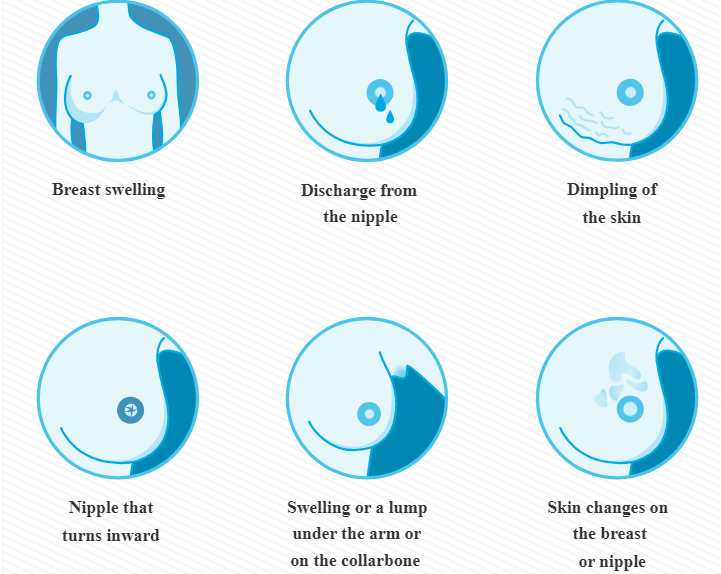
Figure 1: Showing some of the symptoms of breast cancer, source (City of Hope, 2023)
Note: if you notice any of the aforementioned changes in your breasts, visit a healthcare facility for checkup. Alternatively make appointment to see a doctor at Kairos.
Early-stage breast cancer patients frequently have good management of their condition with treatment and live long, happy lives. However, late-stage breast cancer can be lethal and is more difficult to treat.
Ways to prevent breast cancer
Learn how your breasts normally feel and seem so you can spot any changes; Drink alcohol sparingly, if at all; engage in frequent weekly exercise; keep a healthy weight; and select a nutritious diet.
Reviewed by:
Dr. Albert Owor
References
https://www.afro.who.int/regional-director/speeches-messages/world-cancer-day-2023
https://www.cancercenter.com/cancer-types/breast-cancer/symptoms
https://my.clevelandclinic.org/health/diseases/3986-breast-cancer
https://www.mayoclinic.org/diseases-conditions/breast-cancer/symptoms-causes/syc-20352470